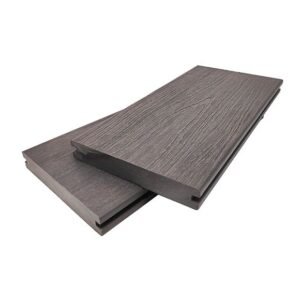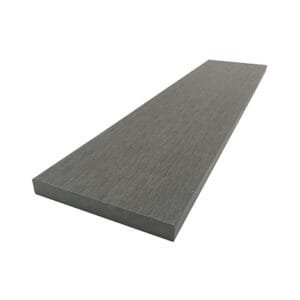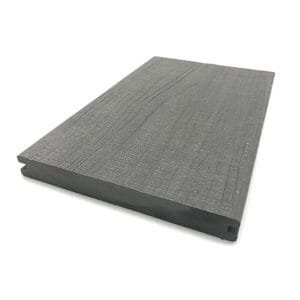

Composite Deck Riser Board for Steps
- Home
- Projects
- Composite Decking
- Composite Deck Riser Board for Steps
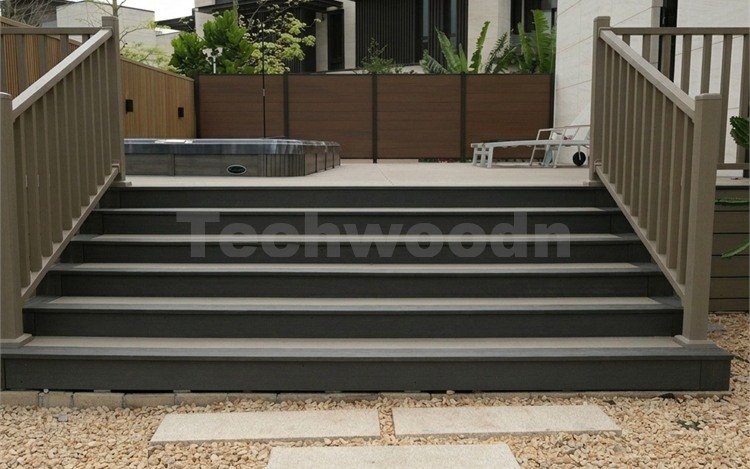
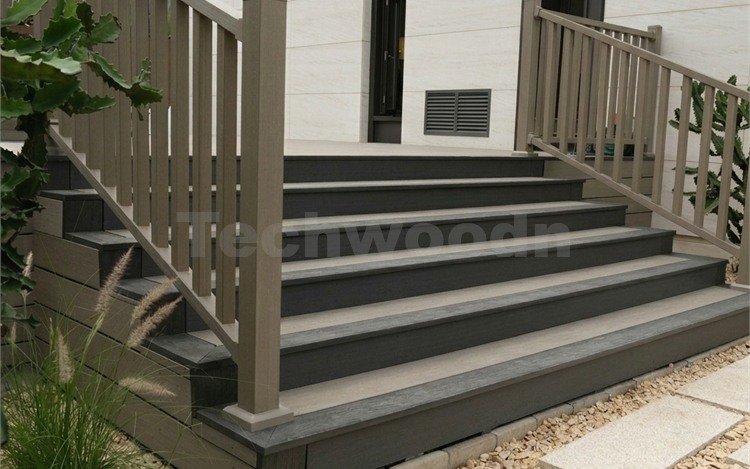
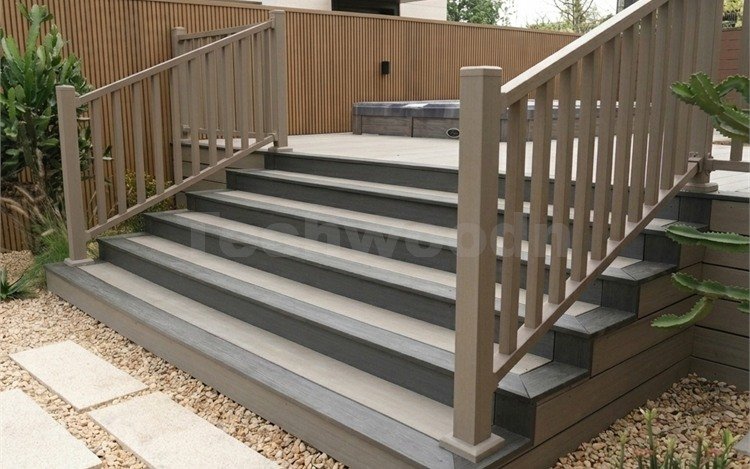
For outdoor space design, steps are never merely structures for going up and down. They also serve as important transitional zones connecting platforms, gardens, building facades, and ground paving. A well-designed staircase can make the space feel more complete and layered. Conversely, a step with a rough facade and messy edges can easily ruin the overall texture.
This is why more and more projects are turning to Composite Deck Riser Board for Steps. It is not the most eye-catching element in the stair system, but often determines whether the finished product looks exquisite. Particularly in wide steps, courtyard platforms, poolside walkways, and villa landscape steps, the quality of facade treatment directly impacts the overall project's completion.
What is Composite Deck Riser Board?
In brief, Composite Deck Riser Board is a decorative panel installed on the front facade of the step. It is typically used in conjunction with tread boards, edge trim pieces, and support systems, mainly for visual finishing and decorative optimization, rather than replacing the main structure itself.
Many issues with outdoor steps do not lie in their structure. For example, they may suffer from disorganized facade colors, exposed substrates, inconsistent corner relationships, or a lack of continuity between steps and landings. The value of composite riser boards lies in integrating these scattered visual problems. They help unify the relationship between step facades, treads, and landings. Whether the substrate is concrete, steel, or other forms, if the facade lacks systematic edge treatment, the front of the steps can appear jarring. With riser boards, the lines become clearer, the layers more distinct, and the connection between steps and decks, terraces, or courtyard activity areas more natural. For modern outdoor projects, this approach not only improves the visual appeal of details but also aligns the entire space with a clean, precise design direction.
The Composite Deck Riser Board for Steps is not limited to old step renovations, it is also suitable for new courtyard steps, villa terrace wide treads, wet area steps around pools, and various outdoor upgrade projects. Whether connecting gardens and platforms or enhancing the transition between buildings and landscapes, it creates a more unified visual effect for step facades. In other words, it is not a localized solution for a specific base but a facade optimization solution applicable to multiple outdoor scenes.
When designing the steps' facade, the key is to maintain harmony in colors, proportions, and surrounding elements. Treads and risers can be chosen with similar colors to enhance the overall unity, or with moderate contrast to highlight layered sense. For wide-step projects, the proportion of standing panels should be controlled appropriately, neither too fragmented to disrupt the whole nor too heavy to appear clumsy. Additionally, steps are typically adjacent to railings, flower beds, walls, or landscape paving, so the color and texture of the step panels should be considered in conjunction with the entire outdoor space.
For outdoor projects that prioritize the finished look, the Composite Deck Riser Board for Steps is not an optional accessory but a crucial element that determines whether the steps are truly 'completed.' It enhances the visual appeal of the facade, strengthens the overall connection between the deck and the steps, and makes patios, terraces, and landscape transition areas appear neater and more sophisticated.
Whether building new steps or upgrading the existing ones, Composite Deck Riser Boards can enhance the spatial presentation of ordinary steps as long as the design concept is clear and installation details are well-executed. Especially in this type of courtyard platform projects, wide steps inherently have strong visual presence; once the facade treatment is properly done, the overall quality of the platform area will be noticeably elevated.