







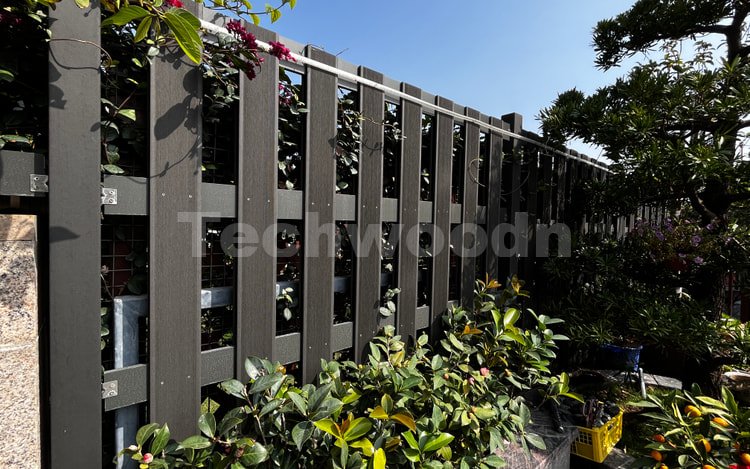
How Much Does a WPC Fence Cost?
“How much does WPC fence cost? ” — This is the first question that almost every purchaser will ask before inquiring. But to be honest, there is no flat price for composite fences: for one fence set, the final price may vary greatly depending on the raw materials, structure, size, color, accessories, order quantity, and country of shipment.
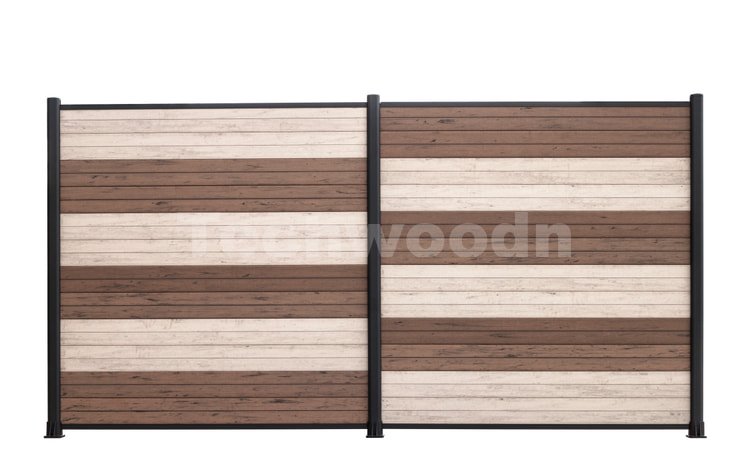
As the source factory of WPC fence, we post the following passage to tell the truth behind the price: What determines the price? What units are used in the industry for pricing? How the cost of imported goods is composed, and how to obtain an accurate quotation that fits your project?
After reading it, you can judge whether a quotation is reasonable and avoid being cheated by "ultra-low prices".
How WPC Fence Pricing Works (Pricing Units Explained)
Many purchasers cannot directly compare quotes from different suppliers because the pricing units are different. There are four common types:
Per panel: suitable for standardized finished fences, procurement is the most intuitive, but it is necessary to confirm which components are included in this "panel" (including post and other accessories?).
Per linear meter: priced based on the length of the fence, suitable for continuous installation projects.
Per square meter: commonly used in the quotation of the board itself, it needs to be converted based on the height of the fence.
Per container/FOB: bulk procurement is most commonly used, and the factory will provide the full container price based on the loading capacity of a 20FT or 40HQ container.
Tips:
Factory direct supply price and retail price are not the same thing. The retail unit price you get in the local building materials market includes channel, warehousing, and retail profits.
The source factory customizes quotations based on specifications and quantities, which is why we adopt "on-demand quotation" instead of a uniform price.
7 Factors That Determine Your WPC Fence Price
By understanding these points, not only can you understand the quotation, but you can also adjust the specifications in reverse according to the budget:
-
Raw material system: Different PE/PP/PVC have different prices and properties; The costs of virgin materials are higher and stability is better than recycled materials; The ratio of wood powder to plastic also directly affects cost and texture.
-
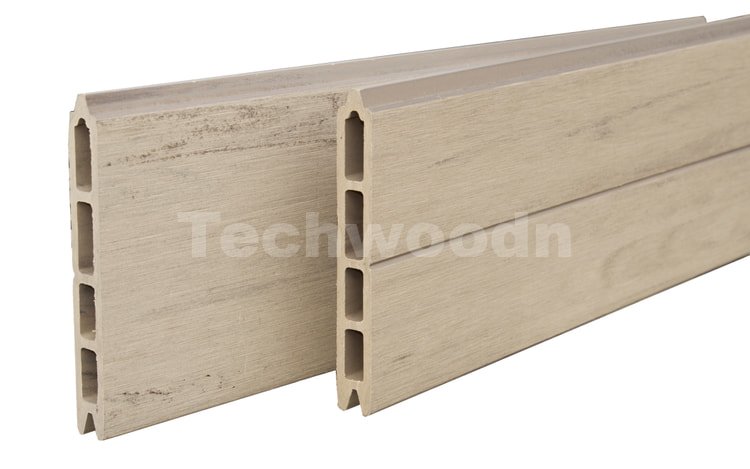
Board structure: Solid profiles use more materials and are more expensive than the hollow; Capped (co-extrusion) coating provides an additional layer of protection and better resistance to fading compared to uncapped, and is also more expensive; The thicker the wall, more durable and costly it is.
-
Surface treatment and color: 3D wood grain, brushed, double-sided usable and other technologies will increase costs; Customized colors usually require a higher MOQ or price than regular colors.
-
Fence system accessories: A complete fence is not just boards, but also includes post, rails, clips, post covers, and connectors. When quoting, it is important to confirm whether it is a "complete set" or "only boards", as this is the most common mistake in price comparison.
-
Order quantity and MOQ: The larger the quantity, the lower the unit price. Whether the minimum order quantity (MOQ) is reached and whether it Is sufficient to fill a container will significantly affect the final price.
-
Certification and Quality Assurance: Products with certification and longer warranty, the quality control costs are higher, so the price increases accordingly – but they are necessary for formal imports and engineering projects.
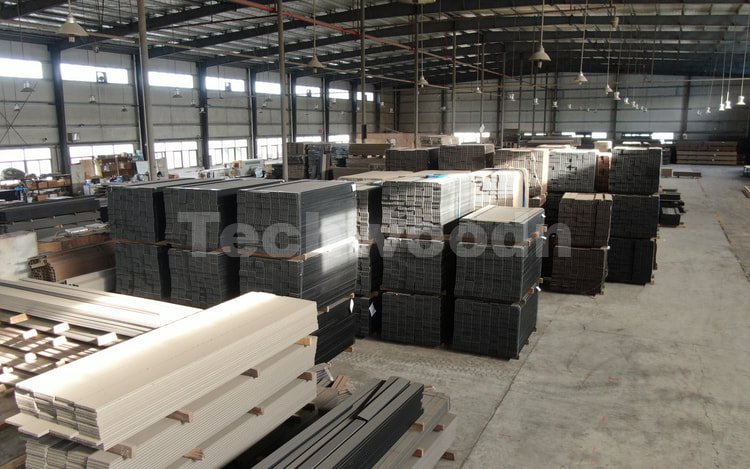
- Export packaging and customization: Packaging for export, OEM/ODM customized logos are also part of the quotation.
Landed Cost for Importers: FOB, CIF, Shipping & Duty
If you are an importer or distributor, the ex-factory price ≠ your true cost. A professional cost estimate should include:
Trade terms: FOB (offshore price, you can arrange the ocean shipping by yourself) and CIF (landed price, including sea insurance) have different quotation standards, so they should be compared uniformly.
• Shipping and container loading volume: How many linear meters/square meters of fencing can be loaded into a 40HQ container directly determines the shared shipping cost per unit – the bigger the volume, the less the allocated cost.
Import tariffs and customs clearance: Different countries have different tax rates for WPC products, which need to be included.
• Loss Reserve: Transportation and installation usually reserve 5% -10% loss.
Only by taking these into account can we obtain the true landed unit cost and make a fair comparison with local supply.
How to Estimate Your Fence Project
Even if you haven't received a quote, you can estimate the usage first:

-
Measure the total length of the fence (in linear meters);
-
Calculate the required number of boards/panels based on the width of each piece;
-
Calculate the number of posts according to the spacing, and match them with clips and edge strips;
-
Reserve 5% -10% loss;
-
Allocate the sea freight and customs duties to obtain the budget range.
By sending this usage list along with the height, color, and destination port to the factory, a precise quotation can be obtained – much more efficient than repeatedly asking 'how much does it cost'.
Get Your Custom Quote
The specifications and destinations of each project are different, so instead of finding a 'standard price', it's better to get a quote that fits your needs.
Please let us have your fence height, length, color, and destination port, and we will reply with a customized quotation.