




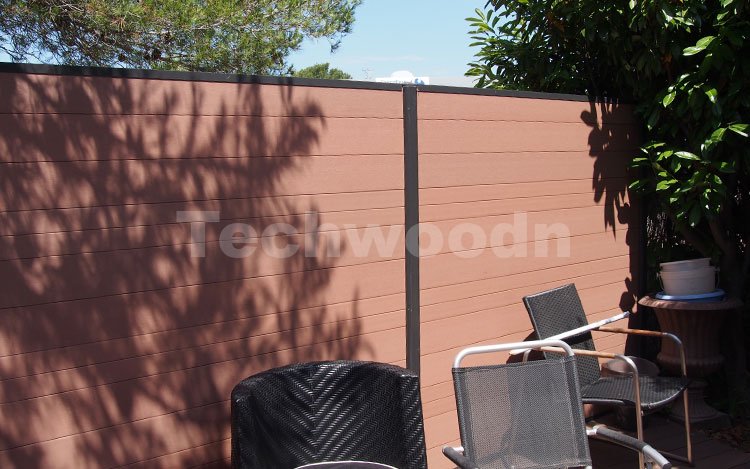
Composite Fence vs Wood Fence: Natural or Next-Gen
In commercial real estate, municipal engineering, outdoor parks, and real estate projects, fences serve not only as fundamental boundary facilities but also directly impact long-term operational costs, overall aesthetics, and safety. Therefore, selecting fence materials should not solely focus on appearance but requirea comprehensive evaluation from a long-term commercial application perspective. Faced with traditional wooden fences and composite fences, an increasing number of project stakeholders are re-evaluating which option is more suitable for long-term use.
From a structural performance perspective, commercial and engineering projects impose higher stability requirements on fences. Composite fences exhibit stable structures, resist cracking, deformation, and rot, while also offering excellent moisture and pest resistance, making them suitable for complex environments such as high humidity and heavy rainfall. In contrast, wooden fences are more susceptible to climate and environmental impacts, prone to cracking, mold, and deterioration when used outdoors for extended periods, and require more stringent construction conditions and post-installation maintenance. Therefore, from an engineering application standpoint, composite fences are more appropriate for long-term fixed facilities.

At the operational level, maintenance costs are often overlooked as long-term expenditures. Composite fences require no painting, oiling, or anti-corrosion treatment. Simply regular cleaning ensures optimal condition, effectively reducing labor maintenance costs and operational disruptions from repairs. In contrast, wooden fences demand periodic maintenance with fixed and inevitable cycles, resulting in higher long-term investments. From a life-cycle cost perspective, composite fences offer greater economic advantages in commercial and engineering projects.
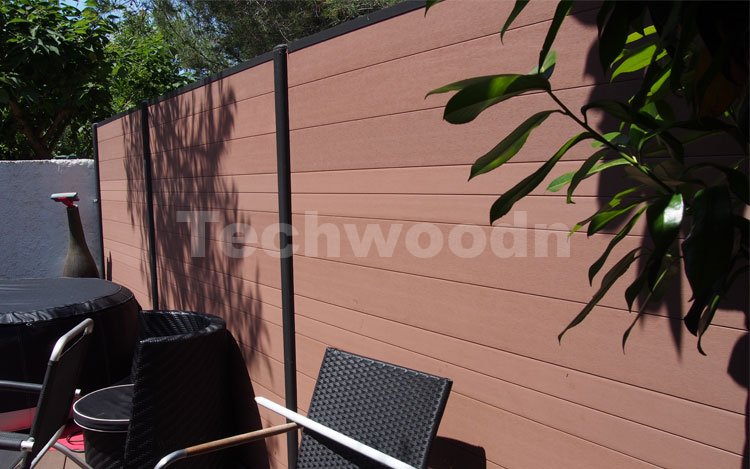
In terms of appearance and project image, the composite fence has a uniform color and regular grain, which better meets the design requirements of modern architecture and commercial spaces. Techwoodn composite fences offer a variety of colors and surface treatment options for easy coordination and unity with building facades and landscape systems. By comparison, although wooden fences have a natural texture, they are prone to fading and color differences over time, affecting overall visual consistency. For project parties who value brand image and long-term quality stability, composite fences have more advantages in appearance management.